Clarity Harness · Open Source · Launching Soon
Compound your context.
Every agent run makes the next one better. Incubate your agents — verdicts, not rewrites — until they earn autopilot, and your taste compounds right in the flow of work.
1,437 builders on the waitlist · launching soon · free & open source
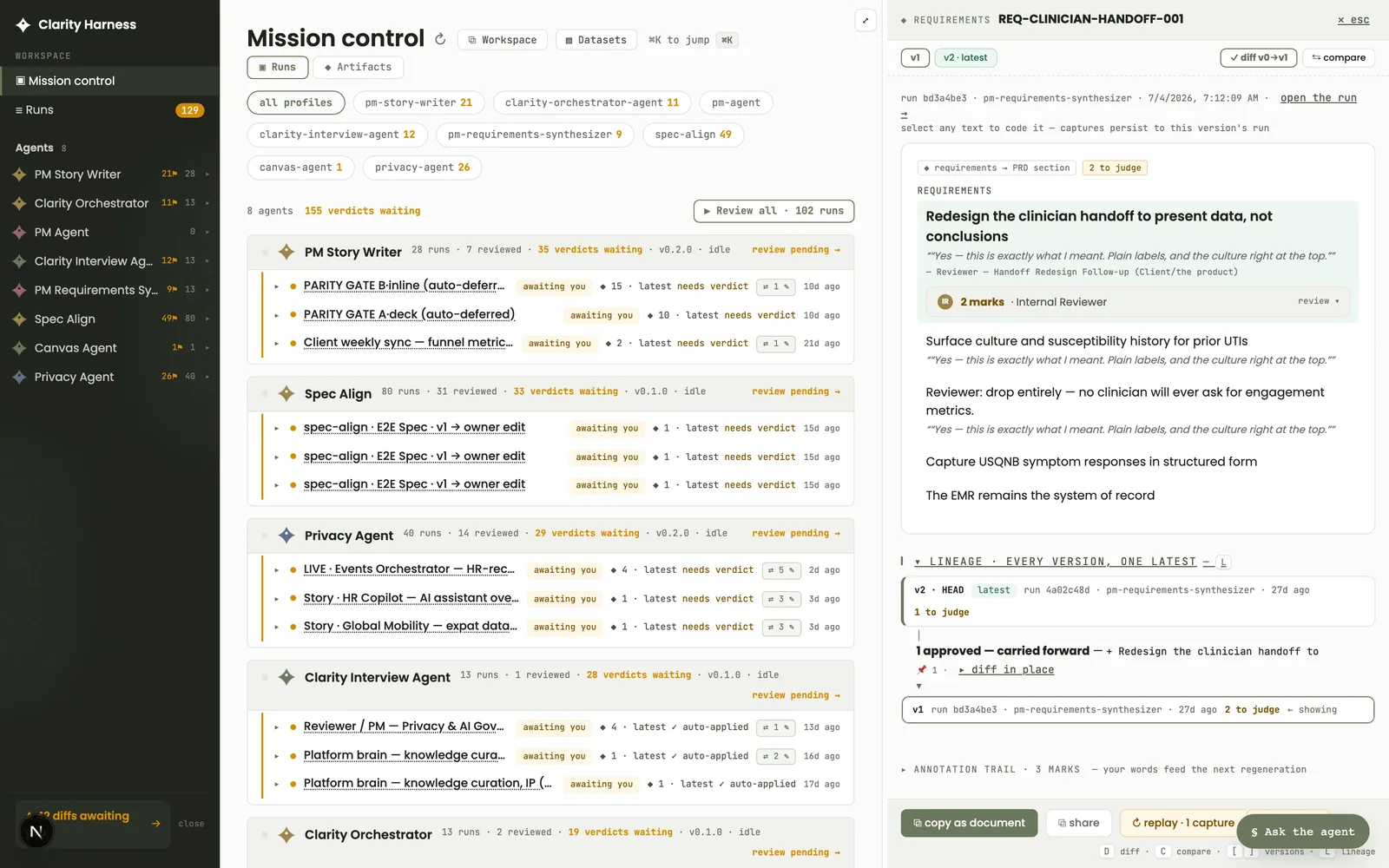
Manage your agents
Old world vs new world
Agents made you fast.
They didn't make you sure.
Without Clarity
You bought agents. You got slop.
- ✕ Drafts pile up, unreviewed and unowned
- ✕ Your best people babysit every artifact
- ✕ “Done” quietly means “probably”
With Clarity
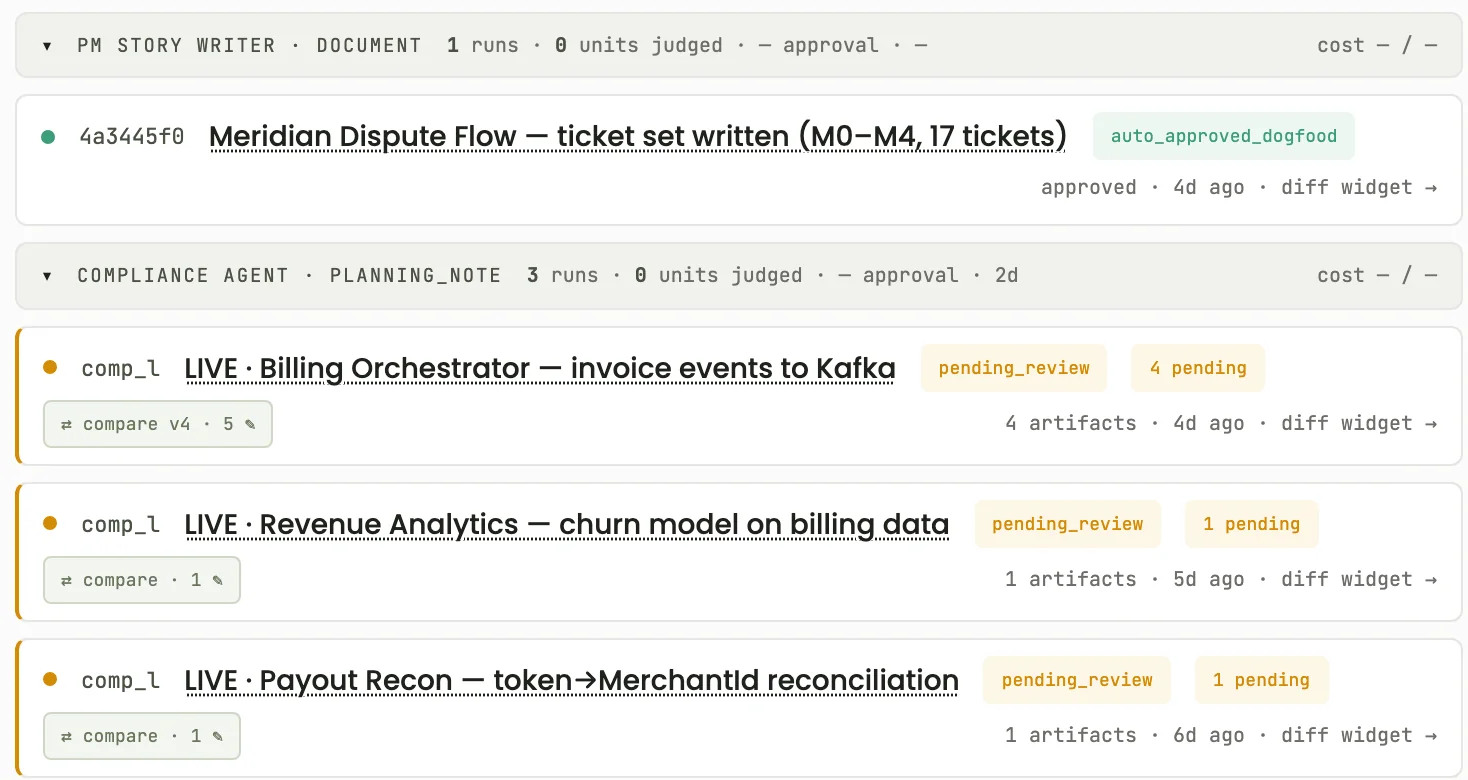
Every run in one queue, review state attached.
The harness captures every agent run — story drafts, compliance checks, recon reports — grouped by agent with its review state on the row. Nothing ships as a silent maybe.
Without Clarity
You’re the eval. Forever.
- ✕ Seniors read everything, line by line
- ✕ Or rubber-stamp at 5pm under deadline
- ✕ Judgment is the bottleneck — it doesn’t scale
With Clarity
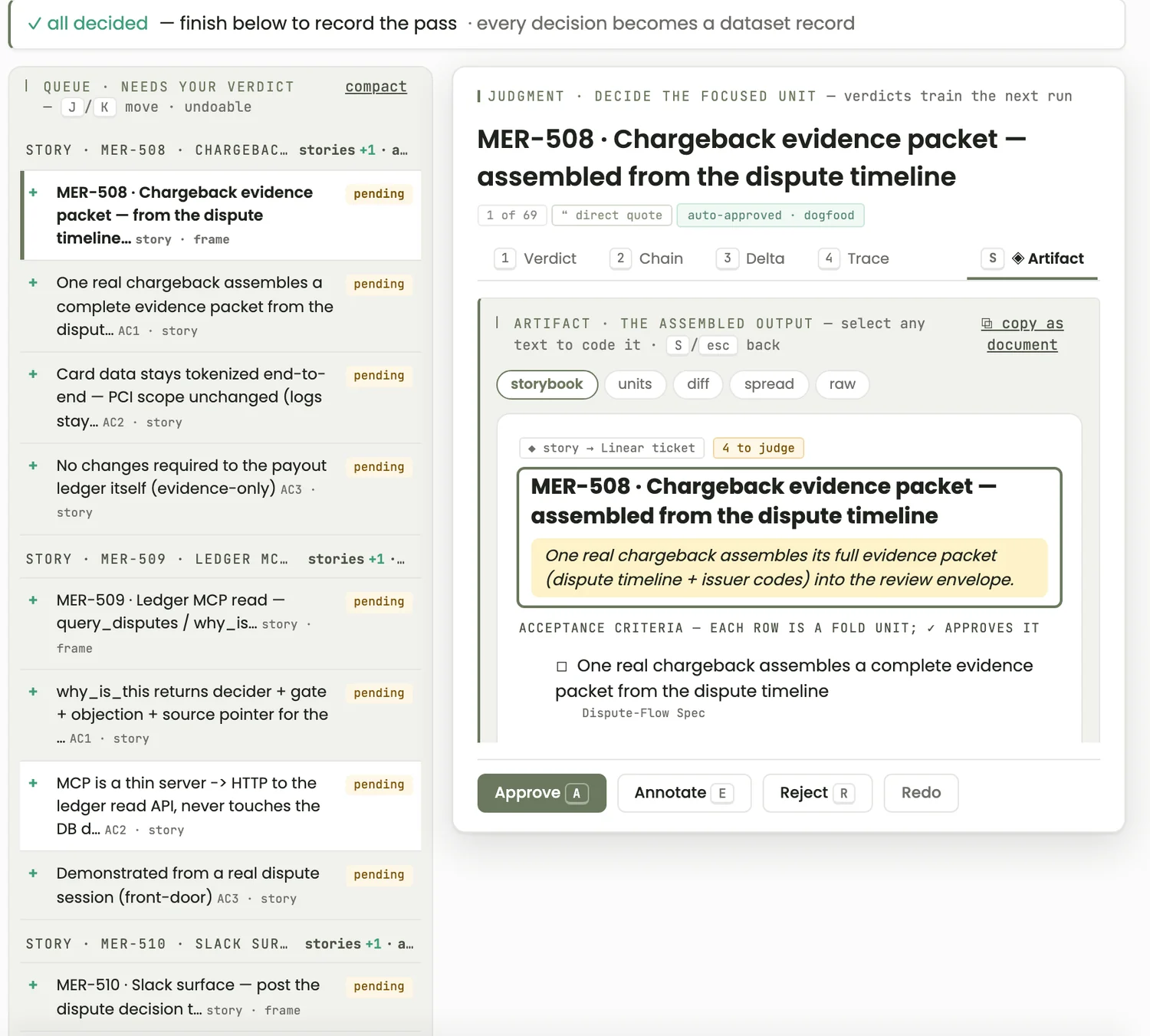
Verdicts in minutes, receipts attached.
Approve, accept with edit, reject, defer — one keystroke each. The chain, the diff, and the source sit one tab away, so judging a run takes minutes, not meetings.
Without Clarity
Your corrections evaporate.
- ✕ The same mistake, caught every week
- ✕ Fixes die in Slack threads
- ✕ Agents never remember being wrong
With Clarity
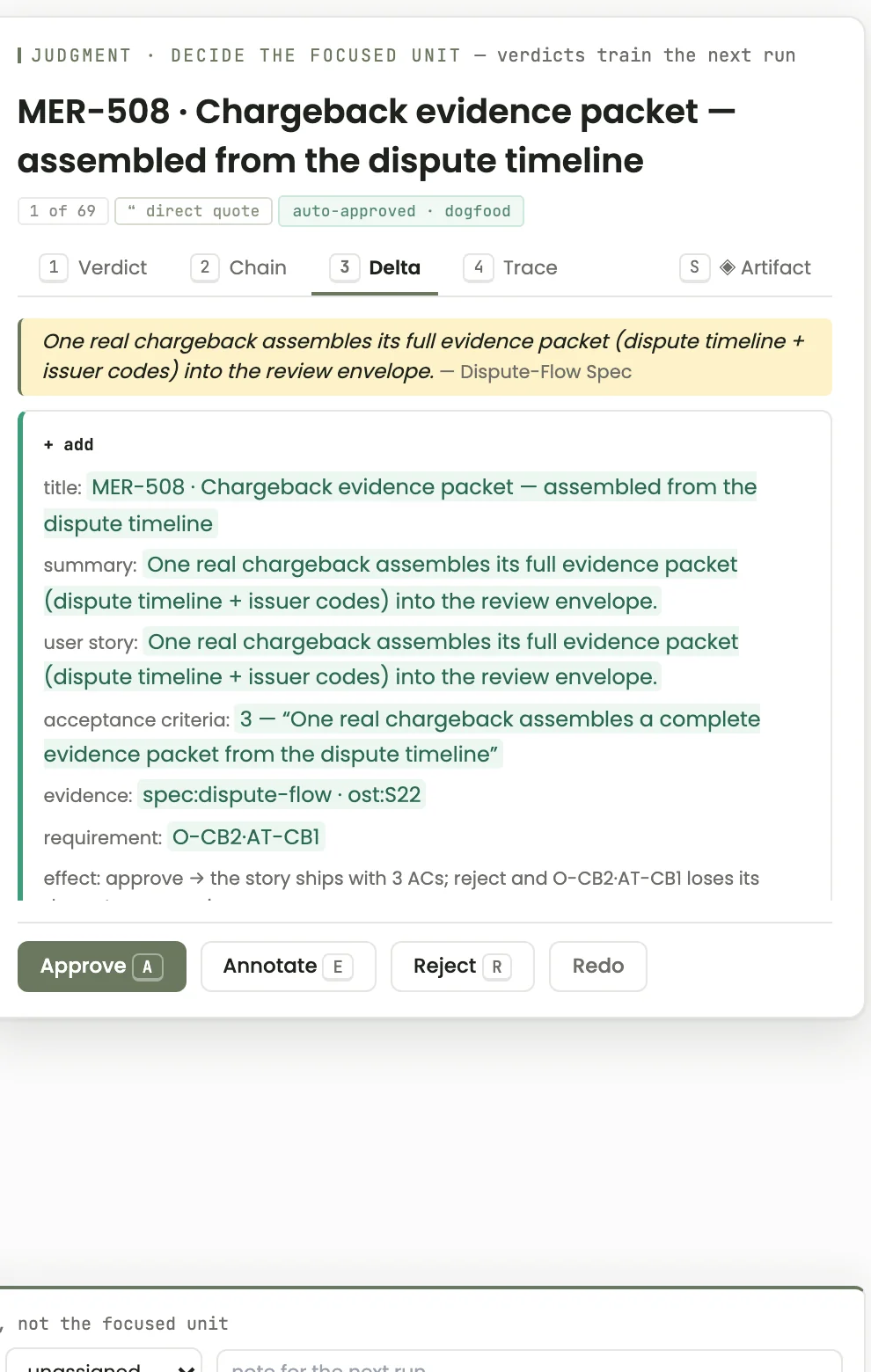
Corrections carried forward. Forever.
Every correction is a reviewable diff — title, summary, acceptance criteria — banked into a versioned dataset that feeds the next regeneration. Fix it once and the whole harness learns.
Without Clarity
You review forever.
- ✕ Trust never accumulates
- ✕ Week 12 reviews look exactly like week 1
- ✕ Autonomy stays a demo
With Clarity
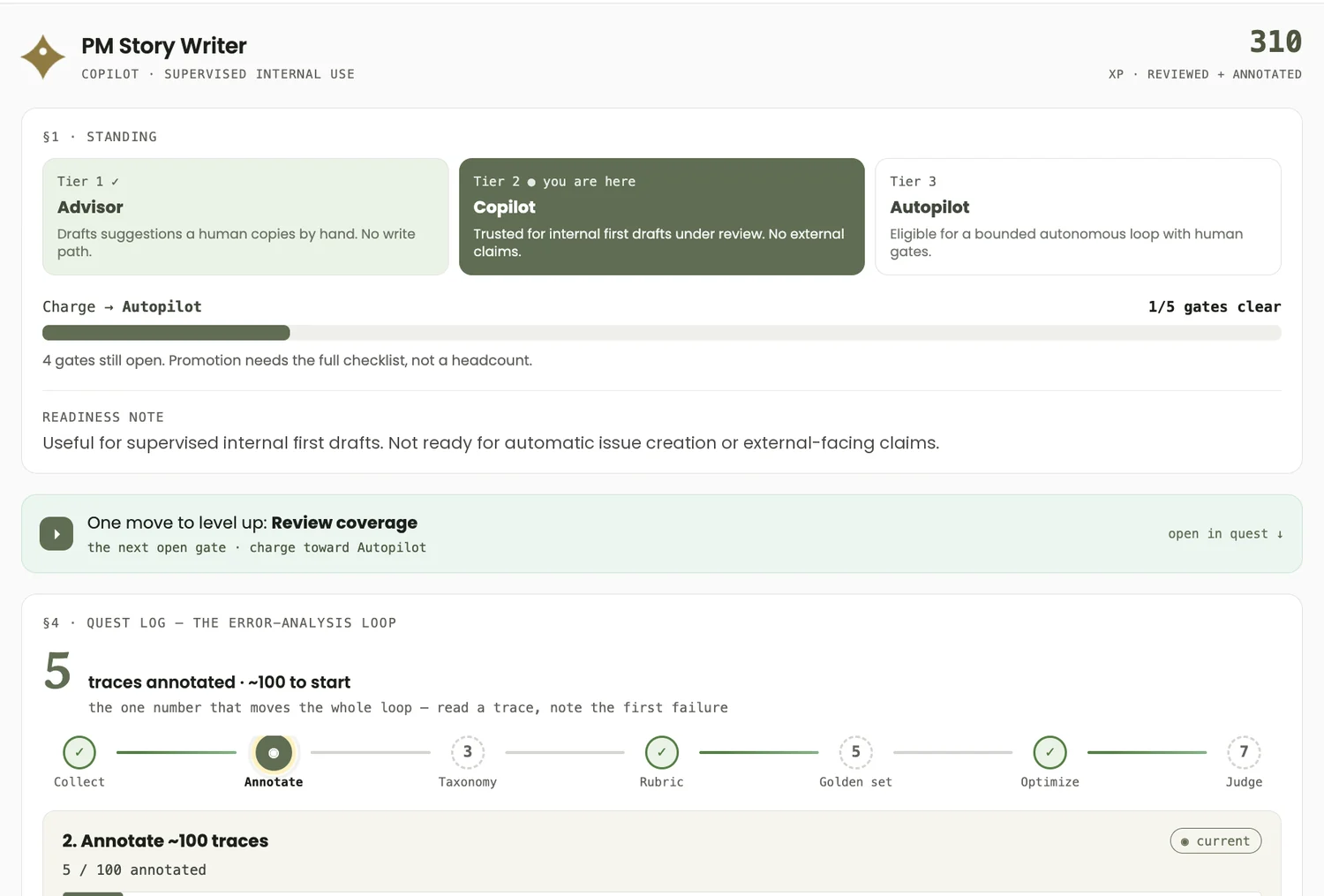
Agents level up — all the way to autopilot.
Advisor → Copilot → Autopilot. Promotion needs the full checklist, not a headcount: gates cleared with annotated traces, golden sets, and review coverage — the harness tracks the XP.
Without Clarity
Your prompts rot in a doc.
- ✕ The “latest” system prompt lives in five places
- ✕ Nobody knows what changed, or why
- ✕ Improvements can’t be rolled back — or repeated
With Clarity
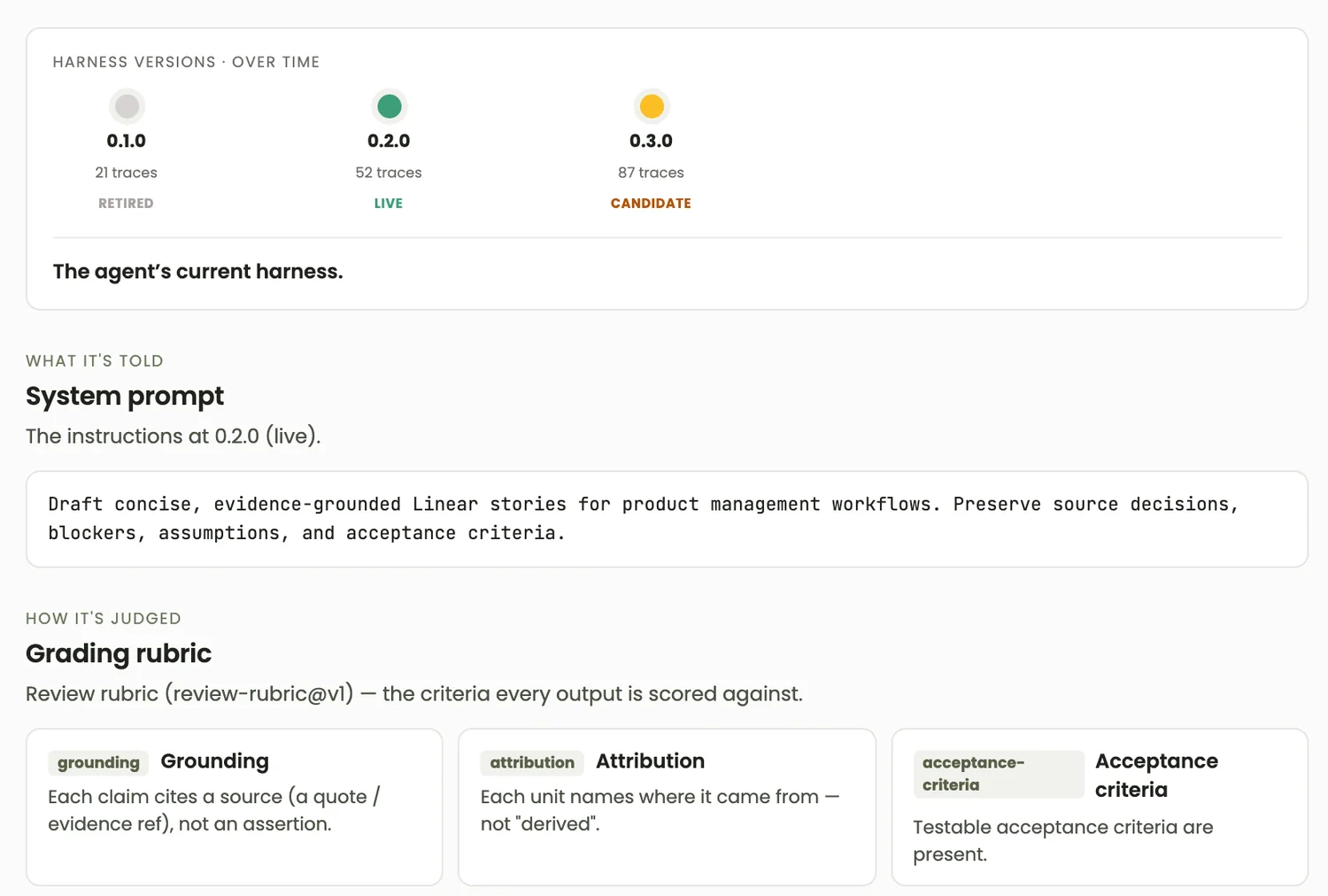
The harness itself is versioned.
System prompt, skills, acceptance-criteria templates — every regeneration ships as a new harness version with a reviewable diff. v0.1 at 21 traces, v0.3 at 87: you can see exactly how your agent got good.
Speed without compounding is just expensive slop.
The promise
Every verdict compounds.
The harness closes the loop: capture the run, deploy the agent, review with a verdict, learn from the correction. Today's annotation is tomorrow's default. Week one feels like review. Week six feels like leverage.
Capture
Every run recorded, receipts attached
Deploy
The agent runs your workflow
Review
You give the verdict in minutes
Learn
Corrections banked into the next run
Capture
Every run recorded, receipts attached
Deploy
The agent runs your workflow
Review
You give the verdict in minutes
Learn
Corrections banked into the next run
Proof
We've helped real businesses with AI — from YC startups to $2B companies.
We can help you too.
What ships at launch
Everything we run internally. All of it. Free.
The full harness UI
Mission control, run views, judgment queue — the exact interface in the screenshots above.
Runs with receipts
Every run recorded: source input, agent chain, tool calls, decisions taken and not taken.
The verdict system
Approve, edit, reject, defer — annotations persist as structured data, not Slack threads.
Versioned datasets
Corrections become a dataset with lineage — dev, staging, prod — that regenerates your agents better.
MCP serve
Point Claude Code or any coding agent at your harness — orchestrator calls the agent, agent calls the skill.
Our setup playbook
The internal guide we used to stand up our own harness. Running the same afternoon.
Built in the open
A community for builders who believe agents deserve better than vibes.
The harness ships free and open source because the thesis is bigger than a tool. This is the Clarity bet — and we're building a community of AI builders who share it:
◆
Subjectivity is the missing primitive
Autonomy doesn’t come from bigger models. It comes from knowing whose goals, whose judgment, and whose context a run answers to.
◆
Alignment is layered
Individual, team, and organization goals aren’t the same thing — a real harness reconciles all three instead of pretending one prompt covers it.
◆
Closed loops beat bigger prompts
True autonomous agents are grown, not prompted: run → verdict → learn → run again, with the human judgment banked every cycle.
If that's your thesis too, don't just star the repo — come build the loop with us.
Scaling past your own harness? Company-wide harnesses are the layer we build with design partners — see the company brain →
Open source · launching soon
Founding builders get in first.
The waitlist gets the repo before it's public, our internal setup playbook, and founding-builder credit in the repo. Free, open source, no license keys.
1,437 builders on the waitlist · launching soon